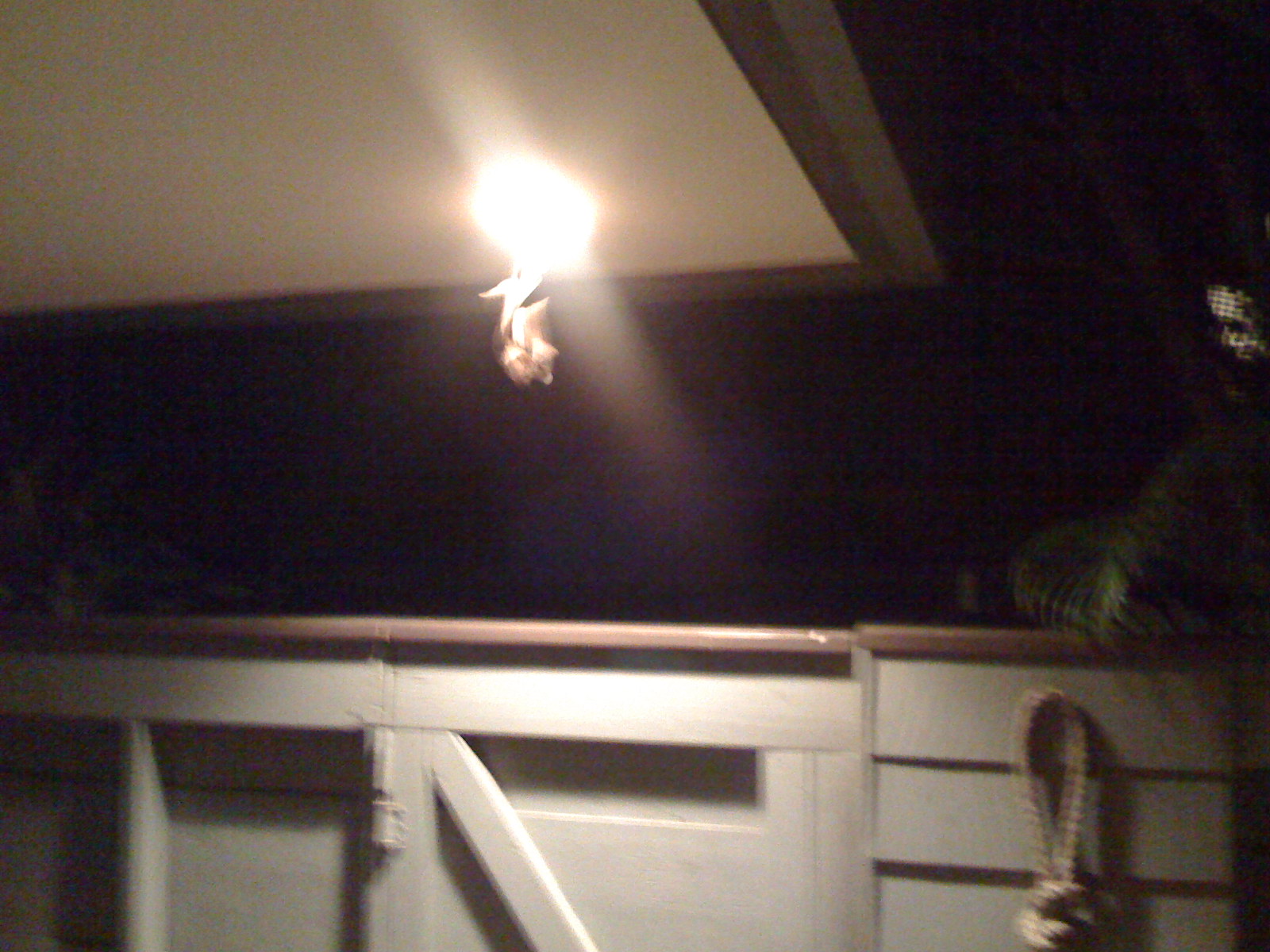
Camera/Chimera

I risked my life to take the garbage out today. There was a pterodactyl-like monster guarding the door. I further risked my life to document this strange and rare monster that was as big as my face.
K said he saw a frog so big the other night that he thought it was a statue. When I asked him how he knew it wasn’t, he ominously said that you could just feel it wasn’t 😀

I was procrastinating my writing (as I am now) by randomly searching on google. I found a very interesting video and blog post on how to learn how to swim in 10 days.

from fourhourworkweek.com (excerpt):
My Top 8 Tips for Novices

Here are the principles that made the biggest difference for me:

1) To propel yourself forward with the least effort, focus on shoulder roll and keeping your body horizontal (least resistance), not pulling with your arms or kicking with your legs. This is counter-intuitive but important, as kicking harder is the most universal suggestion for fixing swimming issues.

2) Keep yourself horizontal by keeping your head in line with your spine — you should be looking straight down. Use the same head position as while walking and drive your arm underwater vs. swimming on the surface. See Shinj Takeuchi’s underwater shots at :49 seconds. Notice how little he uses his legs; the small flick serves only to help him turn his hips and drive his next arm forward. This is the technique that allows me to conserve so much energy.

3. In line with the above video of Shinji, think of swimming freestyle as swimming on alternating sides, not on your stomach. From the TI Wikipedia page:

“Actively streamline” the body throughout the stroke cycle through a focus on rhythmically alternating “streamlined right side” and “streamlined left side” positions and consciously keeping the bodyline longer and sleeker than is typical for human swimmers.

For those who have rock climbed or done bouldering, it’s just like moving your hip closer to a wall to get more extension. To test this: stand chest to a wall and reach as high as you can with your right arm. Then turn your right hip so it’s touching the wall and reach again with your right arm: you’ll gain 3-6″. Lengthen your vessel and you travel further on each stroke. It adds up fast.

4. Penetrate the water with your fingers angled down and fully extend your arm well beneath your head. Extend it lower and further than you think you should. This downward water pressure on the arms will bring your legs up and decrease drag. It will almost feel like you’re swimming downhill.

5. Focus on increasing stroke length instead of stroke rate. Attempt to glide further on each downstroke and decrease the number of strokes per lap.

6. Forget about workouts and focus on “practice.” You are training your nervous system to perform counter-intuitive movements well, not training your aerobic system. If you feel strained, you’re not using the proper technique. Stop and review rather than persist through the pain and develop bad habits.

7. Stretch your extended arm and turn your body (not just head) to breathe. Some triathletes will even turn almost to their backs and face skyward to avoid short gasps and oxygen debt (tip from Dave Scott, 6-time Ironman world champion).

8. Experiment with hand swapping as a drill:

It’s difficult to remember all of the mechanical details while swimming. I short-circuited trying to follow half a dozen rules at once. The single drill that forced me to do most other things correctly is described on pg. 91-92 of the TI book: hand swapping. Coach Laughlin’s observations of the Russian Olympic team practice were a revelation to me.

This is the visualization I found most useful: focus on keeping your lead arm fully extended until your other arm comes over and penetrates the water around the extended arm’s forearm. This encourages you to swim on your sides, extends your stroke length, and forces you to engage in what is referred to as “front quadrant” swimming. All good things. This one exercise cut an additional 3-4 strokes off each lap of freestyle.

I’m not sure what it all means but all I can do is doggy paddle or swim without breathing. Some of the suggestions seem very intutitve. So I’m going to try these tips the next time I’m at the beach.
Settling Down in Kailua: Part 2 Conveniences and Treats

In my short term assessment, Kailua is like a resort town for locals. It doesn’t feel like there are alot of tourists here even though the beach is easy to access golden, quiet, and clean. Maybe it’s that tourists conduct themselves differently here. It’s one of the prettiest and most relaxing beaches I’ve ever been to. We’ve been here for over 3 weeks now and I’ve come to the conclusion that if you can’t find comfort here you’re probably a little crazy.

what to know/ bring to Kailua Beach

  • sunblock– nothing beats Le Roche Posay Anthelios spf 50 any formulation
  • tan enhancer– Maui Babe browning lotion
  • flip flops – reef flip flops can be pretty and you feel like you’re walking on marshmallows (minus being sticky)
  • lip balm/sun block– Epicuren lip balm spf 8

note: if you’re not used to the sun you should have a bottle of water with you.

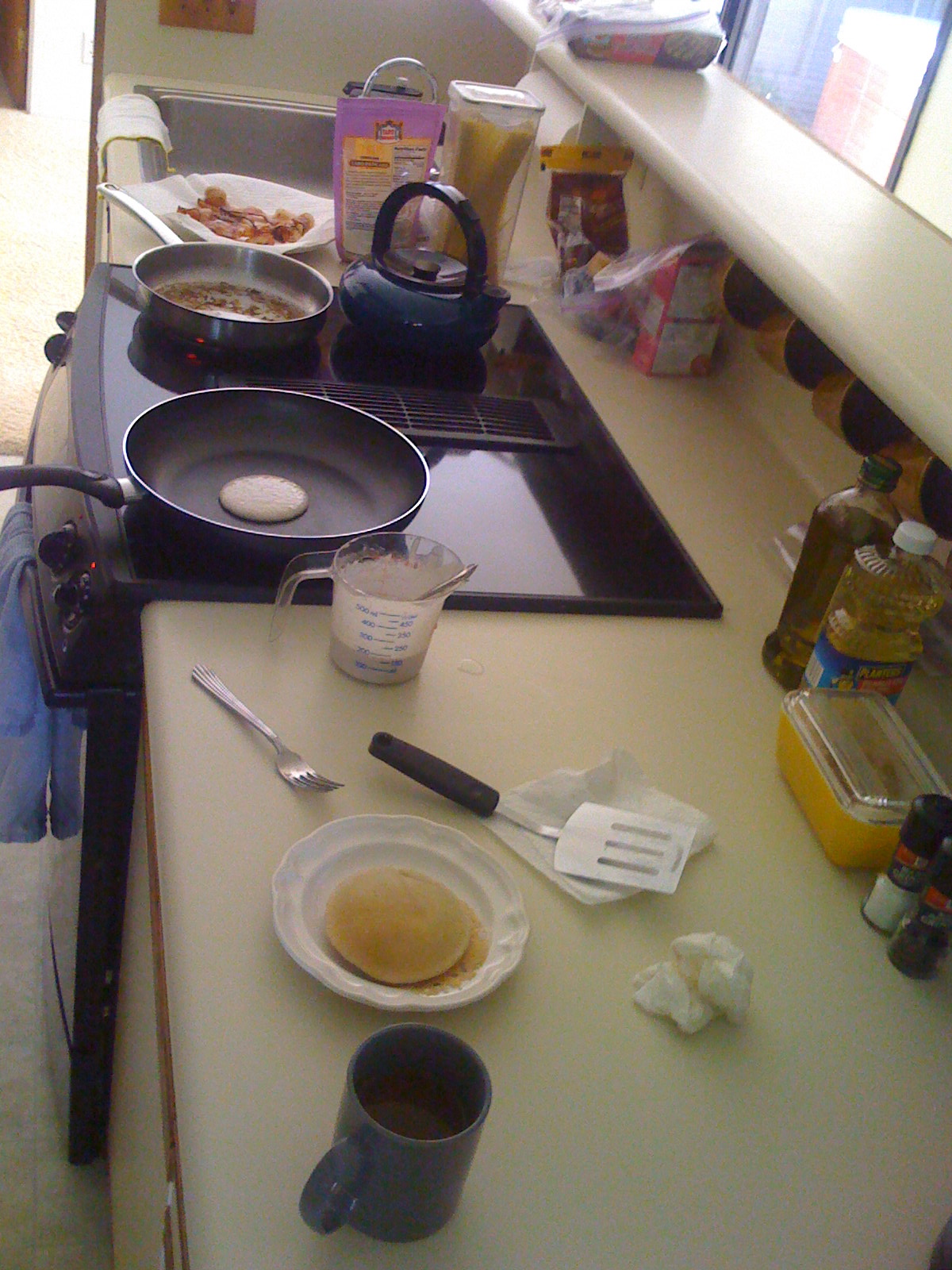
In NY we order takeout or eat out 97% of our meals. In Kailua we’ve cooked every dinner except for one. It’s a refreshing change. One of my favorite things to do here is make breakfast: taro pancakes, bacon and a fried egg. I love breakfast.

how to fry an egg: http://www.ehow.com/how_2637_fry-egg.html

When we were in Shanghai and didn’t have a kitchen I ordered the same thing every morning from Hua Ting Hotel room service: blueberry pancakes, hashbrowns, bacon, congee and a salted egg. Same goes for our four months in Vancouver’s Sutton Place Hotel: pancakes, hash browns, eggs with ketchup and tabasco.

The difference here is that we have a large kitchen with tons of counter space, a dishwasher and a ceramic top stove. I’ve discovered that recipes, like maps aren’t so confounding. If you take the time and patiently do what each step tells you to do, almost anyone can roast a chicken!

favorite recipe: zuni roast chicken: http://www.msnbc.msn.com/id/4401342

These are the things that I haven’t managed to get used to: Hawaii bugs and geckos; how dark evenings are; how quiet it is; and finally people who don’t lock their cars and houses. Pretty much as soon as it gets dark, I lock all the doors and turn on every porch and lanai light. It’s very interesting how menacing a bird landing in a palm tree can sound.

good cheap white wine brands available at Kailua’s Foodland

  1. Coppola
  2. Kendall Jackson
  3. Ecco Domani

Part 3: Kailua: Its little sister Lankai

Settling Down in Kailua Part 1: Renting and Car Buying 101

Today is our fifth day in Kailua. Somehow it feels like we’ve been here for ages. I think much of our ability to adjust has to do with the place we’re living in–a beautiful breezy 2 bedroom directly across from Kailua Beach. We have a backyard, a front yard, and high sloping ceilings that could make anyone forget about a Manhattan alcove studio–no matter how central its location. The rent isn’t cheap but for two people trying to make Hawaii a real home (even temporarily) it was a no-brainer.

We found our place as most people do–through craigslist. It was the first place we saw (and liked) but were wary of the cost as well as this kind of retirement vibe. But the minute you walk out of the house, Kailua Beach stretches out in front of you quiet and golden, and with respect to Susan Sontag it’s so beautiful it looks like a tv show.

Hawaii is an easy place to find a new home. There are hardly any credit or reference checks. Mostly people want to meet you and see how it feels when they talk to you–which I find refreshing and very easy to adjust to.

From what I’ve seen, read, and heard this is the my order of Oahu neighborhoods I would live in:

  • Kailua/Lanikai
  • Diamondhead
  • the North Shore
  • Ala Moana for convenience
  • Waikiki if you need to be around alot of activity (bars, mainstream shopping)
  • and Chinatown which is not very pretty or close to the beach but seems more affordable and has alot of less touristy nightlife

We had settled on a home and next had to find a used car–a first for both of us. K had been combing through craigslist looking for a Toyota Corolla until my dad said we should buy a used car from a dealer because it would be certified and have a dealer’s warranty. A mechanic I spoke to over the course of this search recommended otherwise because a private owner would likely charge less and would be up front about any problems. We focused on finding a Mazda 6 or a Corolla. My dad said that if we were looking at spending 10k-15k that we should also consider the Nissan Versa.

We visited a Servco (a certified used car franchise) near the airport and pulled up a carfax that said that the Corolla we were considering from them with 5k+ miles may have had its odometer tampered with and the actual mileage was closer to 25k. Some dealers will pull up car histories for you but in my opinion it’s worth it to purchase the 10 pack of carfax reports ($30). Another very helpful tip was to identify a good mechanic that could do a once over on the car before you buy it. It seems to be standard practice for the dealer to bring the car to a mechanic of your choosing and pick it up.

Mechanics in Oahu with preliminary good reviews

  • A1 Auto repair
  • McCully Auto Repair

We spent 2 hours at New City Nissan, recommended by McCully Auto Repair. They were very nice but had no real options in terms of used cars in our price range and they were the Honolulu version of a car salesman stereotypes (ie they would not let us leave). They did however offer upfront to bring any of the cars to a mechanic. The place we ultimately purchased from, Servco Subaru actually discouraged it saying they’d had their own mechanic look at it and it was fine (which I find funny and weird). The highlight of New City Nissan was test driving the Versa– a compact cheap little car (14k-19k). Test driving it was like sitting in a little chocolate box. The SL is bluetooth enabled, has an iPod jack, and a seat jack. Very cute and sturdy.

Our salesman, Brian, as we waited for his manager’s offer, made some recommendations in terms of restaurants in Oahu. He said Nico’s for seafood and Pyramid for Indian cuisine. We’ve yet to try either. I think our time at New City basically plumped us up for the kill at Servco Subaru a licensed used Toyota dealer. In their tiny parking lot was a charcoal gray 2006 Toyota Corolla with dark interior, sun roof, and 30,000 clocked miles. We were so tired and happy to find a Corolla in such fine condition that we skipped the mechanic check. Which was a gamble that turned out alright.

Kailua restaurants:

  • Boots and Kimo’s-an Aloha Rag staff member blogged about their macadamia nut pancakes, allegedly the best in the world.
  • Buzz’s Steakhouse– great terrayaki burgers. cash only. no flip flops after 5PM.
  • Lucy’s Bar and Grill– the fish of the day plus crab dynamite reminds me of my favorite dish from Soho’s Aquagrill.
  • Champa Thai– haven’t been yet. recommended by two people.

note- someone that grew up in Kailua swears by the watermelon shaved ice w/ snowcap at Island Snow. IMO, it’s pretty good but Waiolas shaved ice with extra mochi is about the greatest thing one can eat.

Part 2: Conveniences in Kailua